
While working with thousands of leaders over the last ten years, the topic of resilience seems to continually pop up (despite the context).
One of the key things we’ve heard is that leaders know they need to build their resilience but many struggle with how to consistently put it into practice. As a deeply personal and highly contextual topic, it seems that the frame through which we view resilience is at least as important as the content of the specific strategies.
Challenging situations that test our strength and shape our resilience are a natural part of life. One of the greatest stressors we can experience emerges from a gap between what we want to control and what we’re actually able to control. It’s that feeling, a bit like swimming in a rough sea. The floor of the ocean is out of reach with the strong pull of the current while you’re smashed by waves from the surface, salt in the back of your throat, barely able to take another breath before the next wave hits.
We all have those moments when we feel like we can’t get our head above water. While we’re buffeted by waves, we’re still trying to do ‘life’ but feel disoriented, vague or disconnected. Sometimes our path to this place is gradual, and sometimes it’s a quick plunge. In that moment, it feels like all the paths out are invisible.
This more extreme end of the spectrum is a reality for many of us and a possibility for all of us without conscious effort. After each wave crashes, if we can get back up, take a breath, find our balance – we feel resilient. If we’re hit with a number of waves in quick succession, it’s a bit harder to recover. If we’re standing on solid ground in the first place (rather than precariously on tiptoes), we’re in a better place to handle, or even ride, those waves. Resilience is the buffer of the inevitable waves of life.
When we feel resilient (as a state, not a trait), we have an ability to positively respond to a stressful situation with resourcefulness – whether that’s adaptability, perspective or creativity. This resourcefulness can lead to stamina, hope, gratitude and kindness – all of which are incredibly important in our world while we’re seeing extreme levels of loneliness, exhaustion, grief and pain. Not all of which is pandemic-related but is in addition to the usual stressors of our human lives.
One of the benefits of building resilience is to help ourselves create capacity to respond rather than react. Our responses are contextually-driven which means that how we respond often varies greatly. How we’d like to think we’d respond to the inevitable waves, and how we actually do, are often poles apart. So how do we close the gap? When you dive into the research about resilience, the suggestions feel like common sense. We’re often told it’s important to ‘get adequate sleep’, ‘eat well’ and ‘exercise regularly’. While these well researched resilience strategies seem like foundational advice, the common sense doesn’t seem to translate into common action.
In the 2017-18 Australian National Health Survey, 1 in 8 Australian adults (aged 18-64 years) reported experiencing high or very high levels of psychological distress.
67% were classified as overweight or obese
7.5% met the guidelines of vegetable consumption
15% met the guidelines for physical activity
To get a sense of why the insight isn’t translating into practice, it’s helpful to dive into some of the quirks of how our brains work and, even better, what we can do about it.
Here are three key ideas that can help you create resilience your way and ride the waves.

1. Can I increase my own resilience?
It’s easy to fall into the trap of thinking resilience is finite or binary – we’re either resilient or not. In reality, our resilience is more like a ‘cup’ that we can consciously fill up and we don’t all have a set amount. Much like our need for water, our bodies need a constant top up. We can’t drink 60 litres of water in one day and then be set for a month.
Think about what you’re asking from your body each day: physically, cognitively and emotionally; and whether you’re ‘filling it back up’ in equal measure. If your resilience cup is full, you’re more easily able to respond (rather than react) to the inevitable waves of life.
There are benefits to keeping our resilience cup topped up – it strengthens us to face a wave when life inevitably throws one our way. Diane Coutu wrote in the Harvard Business Review,

“The fact is, when we truly stare down reality, we prepare ourselves to act in ways that allow us to endure and survive extraordinary hardship. We train ourselves how to survive before the fact.”
The key is in the preparation – building resilience before we think we need it. In this way, the genius of building resilience is not only realised when the big waves hit, but it also helps buffer even small challenges, frustrations and irritations that, while perhaps not being life altering, impact our ability to show up as the best versions of ourselves.
2. Why don’t other people’s techniques work for me?
Building resilience is not ‘one size fits all’ – your resilience cup is unique. There’s much evidence to suggest some strategies generally work better than others, however, how someone builds resilience is quite personal and unique to their life stage, circumstance and preferences. You need to identify your unique resilience cup and what contributes to it.
How you fill up your resilience cup depends on what sorts of things fill it up. Some of the leaders we’ve coached say things like, if I don’t go for a run in the morning I’m in a foul mood all day, or, I turn the TV off every night at 7.00pm and take time for myself and my family, and, I need just a moment between back-to-back meetings to be mindful, reset, and not let my reactivity in one space spread into others.
Your strategies will depend on how much time you have, your other responsibilities and your daily routine. This is partly why the way in which you build resilience changes over your lifespan, so being mindful of choosing resilience strategies that fit with your life situation is critical. If you find yourself saying, I don’t have time for that... The next question to ask is, What do I have time for? Building your resilience in your way is within your control. As resilience coach Mary Holloway puts it,
“Resilience is knowing that you are the only one that has the power and the responsibility to pick yourself up.”
We’re very busy doing life and will fill the space and time we have available. Giving ourselves permission to ‘be’ rather than always ‘do’ is a good first step as you reflect on how your resilience cup is going at the moment, and what you think would help fill up your cup.
3. How do I make it stick longer than a couple of weeks?
Resilience needs to be grounded in ritual.
We need to engage our ‘habitual response system’ in our brain which can be done by embedding resilience strategies in everyday routine.
It seems logical that topping up your wellness cup every day is good for you and yet we still seem to struggle to do it. Understanding our brains can in fact help to change them.
Research in social cognitive neuroscience and behavioural economics has given us insight into embedding helpful behaviours. The part of our brain that knows what’s good for us works quite differently to the part that actually follows through.
Research by Daniel Kahnemann suggests that we have two decision-making systems in our brain and each one processes information differently.

System 2 is known as our rational system, it’s the part of our brain responsible for critical thinking, reasoning and strategising.
Whereas, System 1 is known as our habitual response system, it’s ultimately the system in our brain that takes action. Otherwise known as our ‘emotional’ system, if our System 1 isn’t engaged (i.e. if we aren’t emotionally motivated) then we are less likely to take action.
It’s like eating the recommended amount of vegetables every day – rationally we know that it is good for us but for many of us we are more emotionally motivated to eat chocolate (with a spoon, straight out of the Nutella jar).
How can we hack our own biological system to help us be more resilient?
The point here is that it’s a daily thing, it’s not enough to have a holiday once a year, or go for a bush walk once a month. Your dentist will tell you that the key part of dental hygiene is brushing your teeth twice a day, every day. Getting a professional dental clean once a year just doesn’t cut it – it’s the routine and ritual, day in, day out, that keeps you on solid ground when the waves hit.
If your cup is empty, and one of life’s challenges pays an unexpected visit, it’s really hard to get a clear mind to go for a walk, think of something you’re grateful for or do some deep breathing. The part of your brain that thinks of these strategies won’t be getting much ‘airtime’. In an emotionally triggered state, the executive functions of your brain struggle to focus on taking action to fill up your cup. Which is why resilience is proactive. You do it when you don’t think you need it, because it’ll be there for when you do.
Sometimes our rituals of resilience get disrupted – like we have a baby, get a serious health diagnosis, lose a job or have a relationship breakdown. The resilience strategies that used to work really well for us suddenly aren’t practical. We need to be resilient with our resilience and pivot quickly to identify what we can do with what time, capacity and resources we have.
Gaming resilience
One way to think about your daily resilience cup is that when it’s full, you’re at 100 points (this is an arbitrary number – but remember we’re talking about subjective wellbeing and resilience here, so you need to create your own benchmark).

Let’s say that each resilience strategy is worth a particular amount of points, depending on how restorative it is for you. For example, for someone, exercise might be worth 40 points each day (for others it might be ‘worth’ more or less). Ten minutes of meditation might be worth 30 points, whereas for others spending three hours playing a computer game would give them that many points. Getting at least seven hours of sleep might be worth another 50 points. The trick is to identify the strategies that have the most amount of ‘resilience points’ for you (and then do them!).
When thinking about your own resilience strategies consider:
What would you love to have time to do, that would feel great for your body and mind?
What did you used to do to fill up your cup but perhaps has dropped away?
If you had a whole day free with no tasks or responsibilities, what would you love to spend time doing?
What resources are available to you right here and now (in the context of your life) that you could build into a ritual of filling up your resilience cup?
The reality is you may already have everything you need to fill up your cup, it might just be a matter of using your space/things/time differently to reach 100 points (or at least get as close as possible, as often as possible). We all have days when we barely reach 10 points but if you find you have a run of those days it’s helpful to notice this pattern and then actively shift it and/or reach out for help, if you need (as you would if you were caught in a rip).
Working with organisations and their staff on the topic of resilience over the past 10 years, we’ve come across a number of strategies for building resilience which we’ve listed below.
Use this list (or create your own) to identify resilience strategies that best fill up your cup. You can allocate a number of ‘points’ for each strategy depending on how much each one fills up your unique cup (0 = ‘doesn’t have any impact or depletes me’ to 100 = ‘I feel fully restored’). Identify the strategies that give you the most points and think about how many points you need every day to top up your cup.
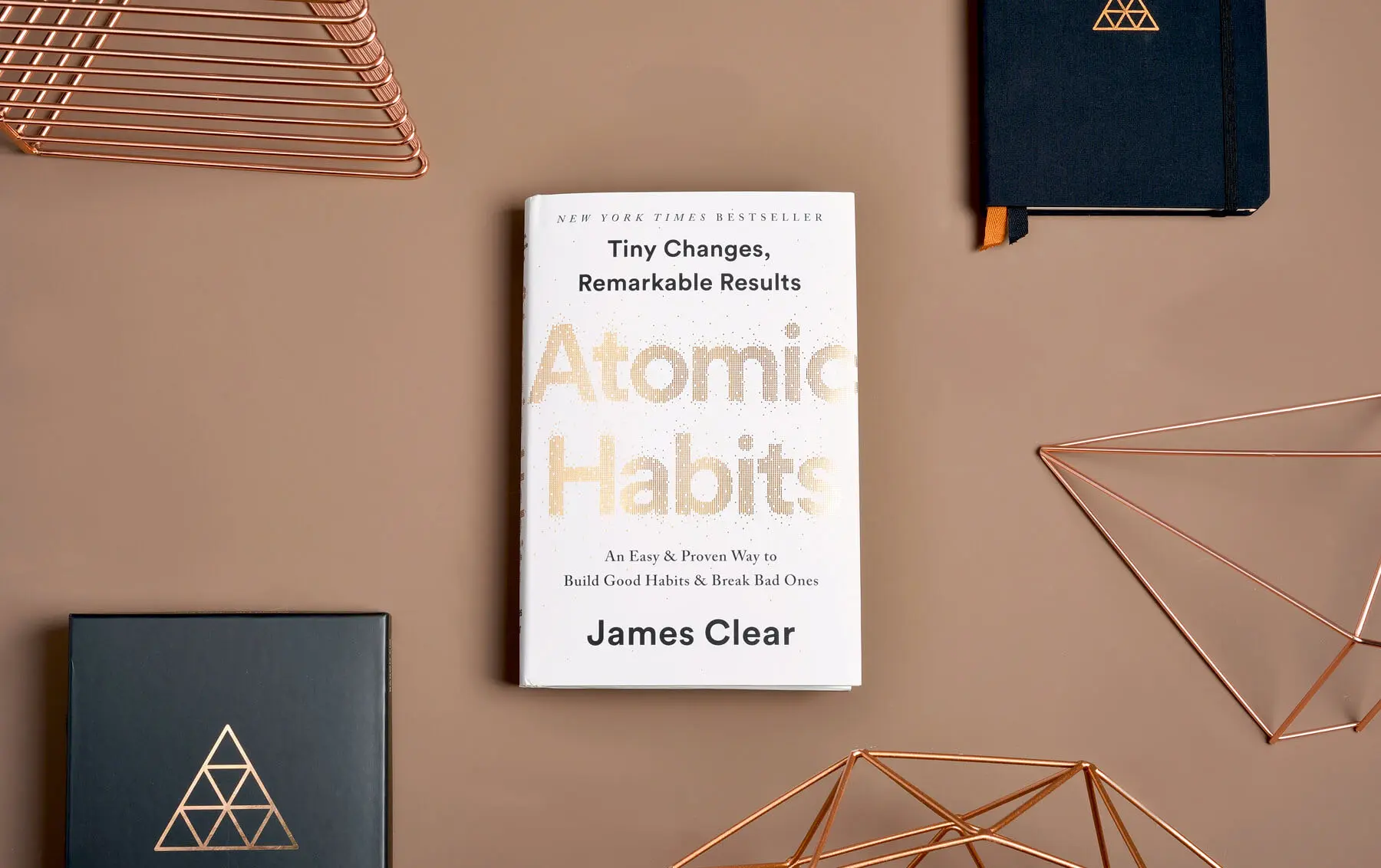
Don’t rely on willpower alone, it depletes quickly at the first sign of resistance. Our best advice for hacking your habitual system is to start small and go with what gives you the most juice. James Clear, author of best-selling book Atomic Habits, puts it simply, “Make it attractive, make it easy and make it satisfying.” Don’t try to tackle the whole list at once, start with one or two and choose the strategies that you actually want to do, not ones you think you should do. Build them into your daily routine and ride the waves.
“Make it attractive, make it easy and make it satisfying.”
Some ideas to fill up your resilience cup...
These ideas are collated from research on resilience and from resilience strategies we’ve heard from leaders over the last 10 years that help them to fill up their ‘cup’.
Find at least five that you think would help fill up your own resilience cup, and how many points (out of 100) you’d assign for each idea, depending on how restorative it is for you.
Recharge your body
Go for a walk, run, ride or surf
Stretch your body
Drink water
Spend time in the sunshine
Eat healthy, nourishing food
Sleep
Have acupuncture or massage (or even give yourself a foot massage)
Rigorous exercise (to really work up a sweat)
Yoga, pilates or preferred class
Hot bath
Deep breathing exercises
Clear the (mind) clutter
Think of three things that you feel grateful for
Journal your thoughts, experiences and feelings
Challenge your thinking (through watching, listening to or reading new material)
Process your situation by talking it through with a friend
Do a brain dump on paper to clear your thoughts
Mind-map complex/complicated issues
Clean and declutter your living space
Meditate
Acknowledge unhelpful thoughts then consciously choose thoughts that will help you
Connect with others
Catch up with friends or neighbours (through video-chat if needed)
Get in touch with a relative or friend you haven’t heard from for a while
Connect over a meal with your household
Do a random act of kindness
Cuddle your pet
Play with your children
Give a member of your household a hug
Be absorbed
Listen to music
Paint, sketch or sew
Listen to podcasts
Play an instrument
Spend time in nature
Play games (computer/console/board)
Watch something that makes you laugh
Read a book
Cook or bake
Garden
Solve puzzles (jigsaws, crosswords, sudoku
Watch something insightful/uplifting
Give yourself a manicure/pedicure
Research and insights drawn from
Australian Bureau of Statistics. (May 2019). National Health Survey: First Results, 2017-18. Report No. 4364.0.55.001
Brooks, A, C. (April, 2020). The three equations for a happy life, even during a pandemic. The Atlantic
https://www.theatlantic.com/family/archive/2020/04/how-increase-happiness-according-research/609619/
Brendel, D. (September, 2015). Manage stress by knowing what you value. Harvard Business Review (Stress)
https://hbr.org/2015/09/manage-stress-by-knowing-what-you-value
Clear, J. (2018). Atomic habits: an easy & proven way to build good habits & break bad ones. New York: Avery, an imprint of Penguin Random House.
Coutu, D. (May, 2002). How resilience works. Harvard Business Review (Organizational structure)
https://hbr.org/2002/05/how-resilience-works
Dolan, P., Hallsworth, M., Halpern, D., Kind, D., Metcalfe, R., & Vlaev, I. (2012). Influencing behaviour: The mindspace way. Journal of Economic Psychology, 33(1), 264-277.
https://doi.org/10.1016/j.joep.2011.10.009
Jackson, D., Firtko, A., & Edenborough, M. (2007). Personal resilience as a strategy for surviving and thriving in the face of workplace adversity: a literature review. Journal of Advanced Nursing, 60(1), 1-9.
https://doi.org/10.1111/j.1365-2648.2007.04412.x
Kahneman, D. (2011). Thinking, fast and slow.
Farrar, Straus and Giroux.
Lieberman, M. D. (2007). Social cognitive neuroscience: A review of core processes. Annual Review of Psychology, 58, 259-289.
https://doi.org/10.1146/annurev.psych.58.110405.085654
Malik, A. (2013). Efficacy, Hope, Optimism and Resilience at Workplace – Positive Organizational Behavior. International Journal of Scientific and Research Publications, 3(10), 1-4. https://doi.org/10.29322
Rees, C, S., Breen, L, J., Cusack, L., & Hegney, D. (2015). Understanding individual resilience in the workplace: the international collaboration of workforce resilience model. Frontiers in Psychology, 6(73), 1-7.
https://doi.org/10.3389/fpsyg.2015.00073
Talbot-Zorn, J., & Marz, L. (March, 2017). The Busier You Are, the More You Need Quiet Time. Harvard Business Review (Stress)
https://hbr.org/2017/03/the-busier-you-are-the-more-you-need-quiet-time