
In high pressure environments with increasing demands, the ability to persevere despite challenges is a necessary skill. Why do some very talented and intelligent people fail to reach their potential? Recently, researchers have suggested that GRIT might be the distinguishing factor.
What is GRIT
From a motivational and psychological perspective, the characteristic of ‘grit’ has been suggested as a key to success in life (Duckworth, Peterson, Matthews & Kelly, 2007).
The hare and the tortoise fable teaches children the value of perseverance, or ‘plodding along’. While it is a well-intentioned story, a fast persevering hare will outrun a slow persevering tortoise. It is not simply perseverance that leads to success but also passion, drive and motivation to achieve your goals coupled with resilience to continue despite setbacks.
To have grit is to passionately work towards longterm goals and to persevere despite adversity or setbacks. Or, in other words, to have both the energy (or passion) of the hare and the perseverance of the tortoise.
Passion, drive and motivation
The passion component of grit is an internal motivator focused on individual action and ambition, providing the means to break through the glass ceiling of performance.
Individuals with constructive levels of passion and drive have greater activity in the left frontal lobe, they are focused on achievement and they show tenacity in the face of early failures (Amodio et al., 2004; Crowe & Higgins, 1997; Markovits et al., 2008; Mehta & Josephs, 2006).
When this energy is over-emphasised and misdirected, it can lead to divisive competition and aggression (McAndrew, 2009). It can also lead to people being exclusively task-oriented, and seeing other people as a means to achieving their own success and rise to power. Ironically, success is rarely realised without building and maintaining constructive relationships.
The NeuroPower™ framework outlines three key ways to develop constructive passion, drive and motivation:
Identify different markers of excellence so that each individual has a different area in which they excel
Enable feedback mechanisms and rewards to reinforce efforts towards achieving a goal
Align individual aspirations and motivations with organisational objectives, to redirect individual competitiveness towards shared competitive advantage
The benefit of motivation and passion is that people will be focused and energised, however when this turns into unconstructive competition, people are more likely to become aggressive, egocentric and burnout.
Passion is best coupled with other traits, to ensure it remains constructive, as such, passion and ambition are just one component of grit. Ambitious people compete with others, whereas gritty people compete with themselves by remaining focused on their goals.
Purposeful goals
Grit is associated with extraordinary success, and therefore requires a long-term commitment towards purposeful goals. Goal setting has been consistently linked with performance (Locke & Latham, 1990), so therefore it is unsurprising that it is a key component of grit.

People develop grit by setting the bar through the lens of excellence, rather than perfection. While seemingly similar, perfection and excellence are very different constructs. Perfection nurtures behaviours considered pedantic, unforgiving and inflexible; leading to anxiety, low self-esteem, obsessive compulsive behaviours, substance abuse and depression (Flett, Hewitt & Heisel, 2014). Seeking excellence is a constructive, noble attitude rather than an outcome. It enables us to continually progress towards achieving purposeful goals.
People can increase their grit by setting longterm goals that are meaningful. While short term ‘quick wins’ might help people stay motivated along the way, it is the more significant goals (in size and importance) that will increase grit and therefore success
Resilience
On the pathway to success, individuals need resilience to keep moving toward goals despite inevitable setbacks. As an essential component of grit, resilience can be thought of as a combination of three social cognitive needs: optimism, confidence and creativity.
Highly resilient people have a toolbox of physical, cognitive and emotional strategies to use during challenging circumstances that potentially prevent them from progressing towards their goals.
The following evidence-based strategies have the most significant impact on resilience. Adopting these are likely to increase an individual’s grit:
30 minutes of exercise 3 times per week
7 hours of sleep per night
Use a trusted mentor to debrief
Regularly practice focused, present attention
Deep breathing
Reactivity regulation
In addition to the above five, reactivity regulation is one of the most powerful ways to build resilience. In his 2011 book, ‘Thinking, Fast and Slow’, renowned Israeli-American psychologist Dr Daniel Kahneman identifies the brain’s reactive habitual System 1 as the fast and intuitive system and the rational System 2 as the slower and deliberate system of reasoning.
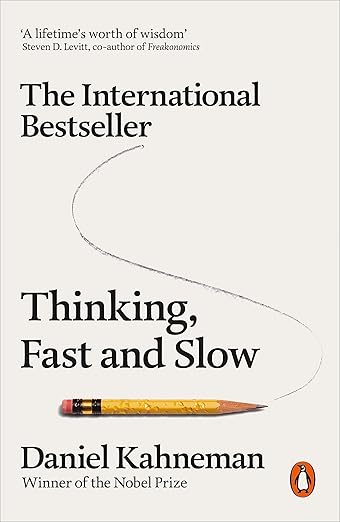
Affective vs cognitive, automatic vs controlled and reactive vs responsive are all labels that psychologists and researchers have used for these cognitive types since Schneider and Shiffrin’s research in the 1970s, but we will refer to the terms ‘reactive habitual’ and ‘rational’.
The reactive habitual system is focused on instinctive, automatic and habitual behaviour; or doing what comes naturally. It is rooted in the primitive survival system that was essential in the face of physical threat in the past; essentially it is fast and reactive, but unconstructive. People often fail to recognise that their behaviour or decision-making has been affected by their reactive habitual system.
The rational system is considered a more modern function of the brain, focused on dealing with highlevel complexity and creating novel ideas and solutions. It is more pro-active and constructive than the reactive habitual system and allows abstract, reflective and hypothetical thought processes. Most people have a good understanding of their rational system and, when asked about how they arrived at a particular decision (such as buying a house) they can usually recall their thought processes.
Grittier people have a greater ability to manage their reactive habitual system when it is triggered. Learning to manage the reactive habitual system will help an individual respond constructively during challenging circumstances and build their resilience to keep moving toward their goals. This emotional regulation helps to shift people from the emotional and reactive mindset and increase the time spent in the rational, constructive system.
When a person’s mind is clouded by the reactive habitual system, it has a limited capacity to process the strong emotion that was triggered. This inhibits people’s ability to innovate, think strategically, build strong relationships and evaluate situations rationally. When faced with a challenge, the rational mindset provides the clarity to question a habitual response, reappraise a situation and take constructive action to move forwards.
The grittier the better
In a group of people with equal talent, the grittier people will outperform those with less grit (Duckworth, 2013). Talent or intelligence is no longer considered the key correlate of success. Another way to describe it is ‘untapped potential’. For example, there may be the best swimmer in the world sitting in a grade 9 classroom, but without the opportunity, drive and motivation to unleash their swimming potential they will not win an Olympic medal. If people don’t have the drive and motivation, inherent ability will lie dormant. “The most successful people in life are both talented and gritty” (Duckworth, 2013).
So how do we build grit? How do we develop a solid work ethic coupled with motivation for the long run? Stanford psychologist Carol Dweck suggests that a growth mindset might give people a huge step forward. The belief that the ability to learn is not fixed and that it can change with effort increases grit – as the brain changes and grows in response to challenge. With more than 30 years of solid research, Dweck has found that people with a growth mindset are more successful, productive, motivated, make better CEOs, more satisfied in their relationships and make better parents and coaches (Dweck, 2006).
Four key steps to developing a growth mindset:
Identify any thoughts you have that emerge from a fixed mindset (eg. I’m not creative, I have a bad memory, I can’t achieve that goal)
Acknowledge that there is always an alternative perspective
Adopt a constructive, growth mindset (e.g. I can do it if I work harder or practice)
Take action based on this reappraisal
When we shift our perspective from life being a string of sprints, to life being a marathon, we grow grittier.
Top 7 ways to develop grit
Link every activity you undertake to your core purpose and plan ways that you can outsource or delegate other activities
When the fear of failure rises, learn how to put that thought to one side and focus on immediate action you can to take to progress forward with your objectives
Practice regulating unconstructive reactivity, e.g. through breath, switching to a constructive mindset, or emotional regulation
Review your long-term goals on a daily basis to check that you are on track
Strive for excellence, not perfection
Observe how you react when you have unforeseen shocks and experiement different ways that you bounce back. Develop your formula to minimise this bounce back time
Think through how what you do immediately links to longer term success and check this assumed cause and effect is accurate. In this way, actively measure your lead and lag indicators of success.
A final thought
In an environment where talent is everywhere, grit will set high performers apart from the rest. Passion and motivation alone will not enable people to achieve their goals, but lead them toward burnout, failure and exhaustion; far too prevalent in professional services firms.
Viewing life as a series of sprints will lead to burnout. Set meaningful, long-term goals, navigate the road blocks, limit unconstructive reactivity and build your resilience to win the marathon.
References
Amodio, D., Shah, J., Sigelman, J., Brazy, P., and Harmon-Jones, E (2004). Implicity regulatory focus associated with frontal cortical activity, J. Exp. Soc. Psychol 40, 225-232.
Crowe, E., & Higgins, T., (1997). Regulatory Focus and Strategic Inclinations: Promotion and Prevention in Decision-Making. Organizational Behavior and Human Decision Processes, 69, No. 2, 117–132. Academic Press.
de Quervain DJ, Roozendaal B, McGaugh JL (August 1998). “Stress and glucocorticoids impair retrieval of long-term spatial memory”. Nature 394(6695): 787–90. Bibcode:1998Natur.394..787D. doi:10.1038/29542.PMID 9723618.
de Quervain DJ, Roozendaal B, Nitsch RM, McGaugh JL, Hock C (April 2000). “Acute cortisone administration impairs retrieval of long-term declarative memory in humans”. Nat. Neurosci. 3 (4): 313–4. doi:10.1038/73873.PMID 10725918.
Duckworth, A. L., Peterson, C., Matthews, M. D., & Kelly, D. R. (2007). Grit: Perseverance and passion for long-term goals. Journal of Personality and Social Psychology, 92, 1087-1101.
Dweck, C. S. (2006). Mindset: The new psychology of success. The Random House Publishing Group, New York, NY.
Flett, G. L., Hewitt, P. L. & Heisel, M. J. (2014). The destructiveness of perfectionism revisited: Implications for the assessment of suicide risk and the prevention of suicide. Review of General Psychology, 18(3), pp.156-172.
Locke, E. A. & Latham, G. P. (1990). A theory of goal setting & task performance. Englewood Cliffs, NJ, US: Prentice-Hall, Inc.
Markovits, Y., et al., (2008). Regulatory foci and organizational commitment. Journal of Vocational Behavior 73, 485-489.
McAndrew, F. T., (2009). The interacting roles of testosterone and challenges to status in human male aggression. Aggression and Violent Behavior. Elsevier Ltd.
McAuley MT, Kenny RA, Kirkwood TB, Wilkinson DJ, Jones JJ, Miller VM (2009). “A mathematical model of aging-related and cortisol induced hippocampal dysfunction”. BMC Neurosci 10: 26. doi:10.1186/14712202-10-26. PMC 2680862. PMID 19320982.
Mehta, P. H., & Josephs, R. A., (2006). Testosterone change after losing predicts the decision to compete again. Hormones and Behavior 50, 684–692.
Nelson, R. J. & Trainor, B. C. 2007. Neural mechanisms of aggression. Nature Reviews Neuroscience, 8, 536-546.