
Steve Jobs is arguably one of the most influential and innovative minds in recent history. However, the myth of Steve Jobs as a hot tempered and unpredictable maverick may be obscuring the true antecedents of innovation at Apple under his leadership.
Recent discoveries in neuroscience have helped to codify some of the key elements of creating innovative environments, and help make explicit some of the skills in which Steve Jobs was unconsciously competent.

“Innovation has nothing to do with how many research dollars you have. When Apple came up with the Mac, IBM as spending at least 100 times more on research and development. It’s not about money. It’s about the people you have, how you’re led, and how much you get it.” – Steve Jobs, Fortune, Nov 1998
The idea in brief
With Apple heralded in March 2015 as the most profitable company in the world, innovation as a driver of value and profit is no longer in question. But Apple isn’t the only company that is pursuing innovation. As we travel around the world every organisation we visit seems to have an innovation strategy, and points proudly toward their innovation processes.
Much is talked about in terms of innovation, but the proof is always in the pudding. Apple consistently delivers market disruption and seems to always be way ahead of any others. In this article we explore five of the strategies employed by Steve Jobs that begin to define the role of the leader in creating an environment where innovation can flourish. And while it is impossible to quantify the magic that is Steve Jobs, here are five characteristics that neuroscience tells us that Steve Jobs got right.
He was sensitive to customer frustrations, pain points and imperfections with the customer experience
He shut down negativity
He knew the difference between nonconstructive and constructive conflict
He understood the innovation process
He knew how to create environments of innovation
“You’re missing it. This is not a one man show. What’s reinvigorating this company is two things: One, there’s a lot of really talented people in this company who listened to the world telling them they were losers for a couple of years, and some of them were on the verge of believing it themselves. But they’re not losers. What they didn’t have was a good set of coaches, a good plan. A good senior management team. But they have that now.” – Steve Jobs, Business Week, May 1998
Beyond the myth: the truth about innovative leadership
Steve Jobs is arguably one of the most influential and innovative minds in recent history. However, the myth of Steve Jobs as a hot tempered and unpredictable maverick may be obscuring the true antecedents of innovation at Apple under his leadership. Recent discoveries in neuroscience have helped to codify some of the key elements of creating innovative environments, and help make explicit some of the skills in which Steve Jobs was unconsciously competent.
The mythical ‘Steve Jobs’ model of leadership is of a single-minded dictator who never listened to advice or divergent points of view. However, single minded dictatorship encourages compliance from employees rather than innovation. It takes more than a simple mandate to empower employees to be truly innovative and unconventional.
The actual culture at Apple (and at NEXT Computers and Pixar, companies that Jobs helped build during a period when he was banished from Apple) was actually very supportive and protective of truly innovative people at all layers of the organisation who recognised and respected innovation as a pathway to a brighter future.
Jobs’ innovative fire has made a tangible difference in the lives of almost everyone on earth. And a lot of this was done during a major downturn in the world-wide economy. In the years that the global economy was in recession, Apple continued to introduce a steady stream of innovative products that revolutionised the entertainment and smart phone industries, and spawned a global tablet market. According to research firm HIS iSuppli, Apple had sold 275 million units by 2015.
Jobs is famous for relying on his instinct about people, ideas and customer needs. This instinct was often misinterpreted as irrational and impervious to external influences. However, what we find when we look through the lens of neuroscience is that Jobs was hyper-sensitive to two main external influences:
Real customer needs and frustrations with the way things were done; and
Structures, criticisms and conflict that eroded his employees ability to be innovative.
This hypersensitivity to these two areas is part of what we propose defines innovative leadership. In all, the lessons learned from Apple indicate that there are five lead indicators that provide an environment of innovation.
Five things that define innovative leadership
1. Be sensitive to customer frustrations, pain points and imperfections with customer experience
The problem with becoming an expert is that it becomes much harder to step into the shoes of the non-expert. This leads to the development of products that suit experts more than non-experts, and potentially alienates entire sections of a customer base. They lose the ability to step into a customer’s shoes.

A lot of companies develop products that are technically brilliant, but this increasing brilliance is often accompanied by an increase in complexity. What they fail to realise is that technical brilliance includes creating products that create an easier and simpler customer experience.
Jobs was sensitive to the frustration of consumers in having to navigate complex software and systems. He was not blinded by his own experience, and could see that the complexity of the technology was a barrier to people being able to use the technology. This meant that at a time where other technology companies were adding new features and extra functions, Apple was making things simpler, focusing on improving the customer experience rather than indulging in technical brilliance.
This is very much the application of a ‘Design School’ mindset of identifying and solving problems. This approach differs from the more traditional scientific method, which starts by defining all the aspects of a problem before arriving at a solution.
Design thinking is a more iterative process, that takes into account known and ambiguous elements of a situation in order to provide solutions. Because of its iterative process, intermediate ‘solutions’ are also potential starting points of alternative paths, including redefining of the initial problem.
Steve Jobs was able to step out of his own ‘expert’ shoes and into the shoes of the customer. In doing this, the problem needing to be solved was redefined. He was able to see that there was a need for increased simplicity in order to increase functionality, and that increasing complexity was actually decreasing functionality.
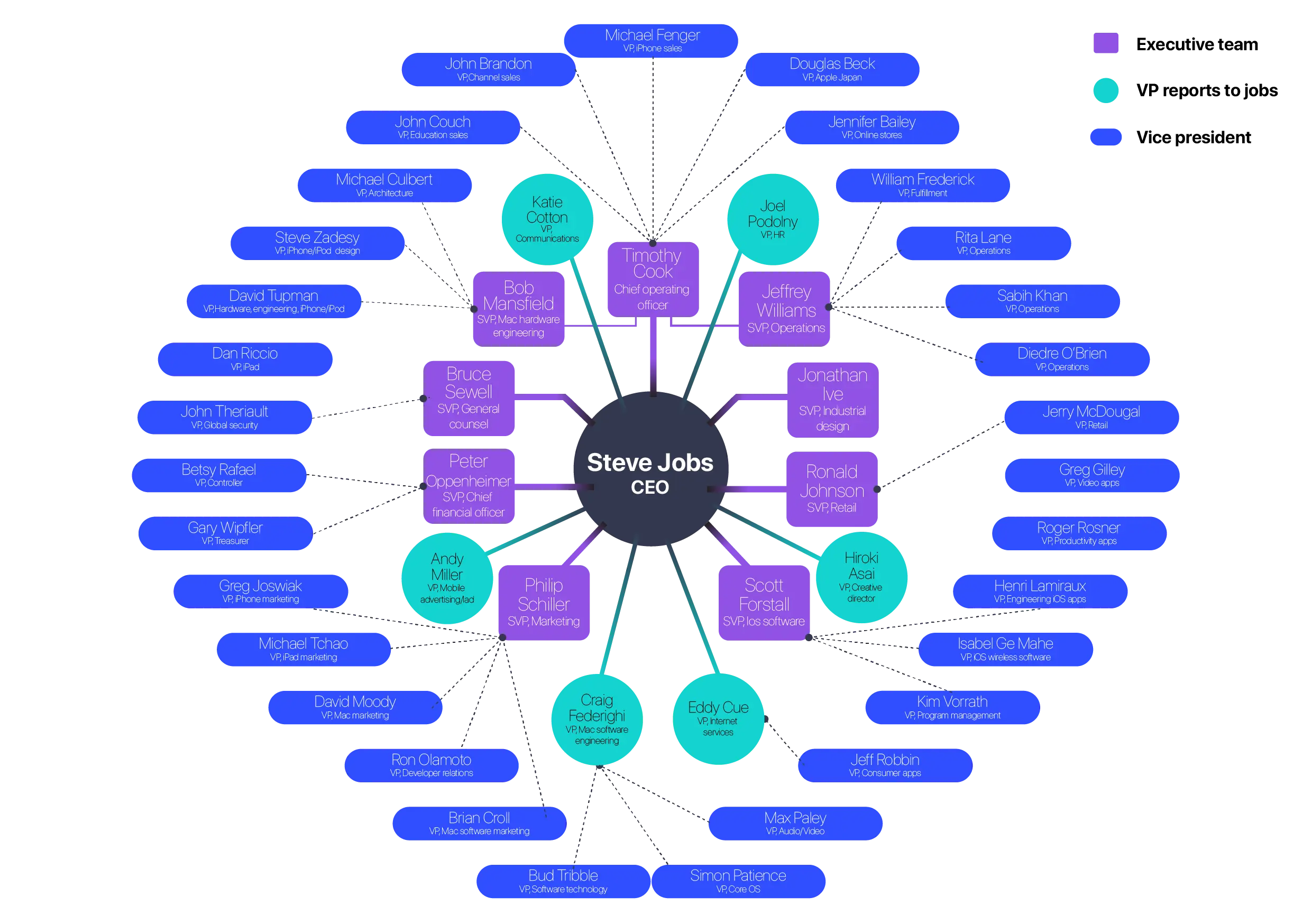
Figure 1. Organisational structure of Apple under Steve Jobs
This chart is drawn from the May 23, 2011 issue of Fortune. Rather than a model of control or bureaucracy, this was a ‘flat’ model that protected and encouraged innovation.
2. Shut down negative views
In the ‘Steve Jobs’ myth people often focus on the aggression with which he weeded out negative views. Stories of tantrums and aggressive behaviour in the workplace are a common narrative that accompany descriptions of life at Apple.
However, the reality is that negativity (as opposed to constructive criticism or disruptive thought) actively suppresses innovation. You have to be decisive and strident with the way that you weed out negativity against the innovation mindset. This is reflected in most companies that are considered highly innovative (i.e. Amazon, Virgin, Uber, Animal Logic).

The problem is that negativity is rooted in fear, and to be innovative you can’t afford to have fear-based responses. When negativity infects a creative process, the perceived weeds become the main point of focus. All of the innovation resources become directed towards fighting the weeds in creative ways rather than innovating and redefining products and ways of doing business.
The other way that negativity undermines innovation is that it creates a false sense of reality. Insight from behavioural economics show us that the fear of loss is greater than the pleasure of an equivalent gain, which means that we can easily view negative consequences of a decision as being more ‘realistic’ and miss out on opportunities.
Innovative self-awareness is when the ‘weeds’ are kept at bay, and the myth of negativity being realistic, and positivity being fanciful, is no longer the dominant view. We can categorise the ‘weeds’ into nine types of negativity that you need to shut down in order to foster an innovative environment. They are the nine things that Steve Jobs would have been unlikely to allow to propagate in his team.
Self-righteousness “It’s just a bad process”
Pride “I’m being taken for granted”
Over-achievement “I just don’t have the time”
Elitism “It’s not really my thing”
Avoidance “Other people are exhausting”
Paranoia “This is riskier than people realise”
Boredom “This group’s slow pace is boring”
Dominance “I’ll do it on my own”
Overwhelm “It’s all just too much”
3. Know the difference between nonconstructive and constructive conflict
One of the key things that Jobs was able to discern was the difference between constructive and nonconstructive conflict.
Constructive conflict is targeted towards protecting an innovative workforce from influences that would undermine the creative process, and is also used to disrupt the status quo and force people to look at things in a new light.
The lag indicators for constructive conflict is high motivation and a feeling of safety and support, and where small failures are seen as another step toward a better solution.
Non-constructive conflict leads to stress, anxiety, exhaustion and de-motivates employees. The lag indicators of a non-constructive culture in an environment of winners and losers, where everyone is out for themselves and a good day is when you win - even if this actually means sabotaging someone else’s performance.
The difference is the environment - is the objective to be innovative or to win the game? If the object of the game is to win then losing has dire consequences, if the object is to be innovative then the fear of loss loses its grip on behaviour. Once again we can see that the underlying emotion that is being avoided is fear. For true innovation to flourish then fear must not be a motivating behaviour.
When Jobs was at the helm of Pixar, he was often in conflict with investors and the government that was trying to prevent the company from performing at its very best. He was acting not as an adversary to his employees, but as a strong protector of the culture of innovation at Pixar.
He fought fire with fire, so when he saw nonconstructive conflict he was angry. However, where he saw constructive conflict he became their defender and protector so they could get on with the work of being innovative.
Much is talked about in terms of innovation, but the proof is always in the pudding. Evidence of a culture and philosophy of innovation can be found in the thousands of patents that have been registered by Apple.
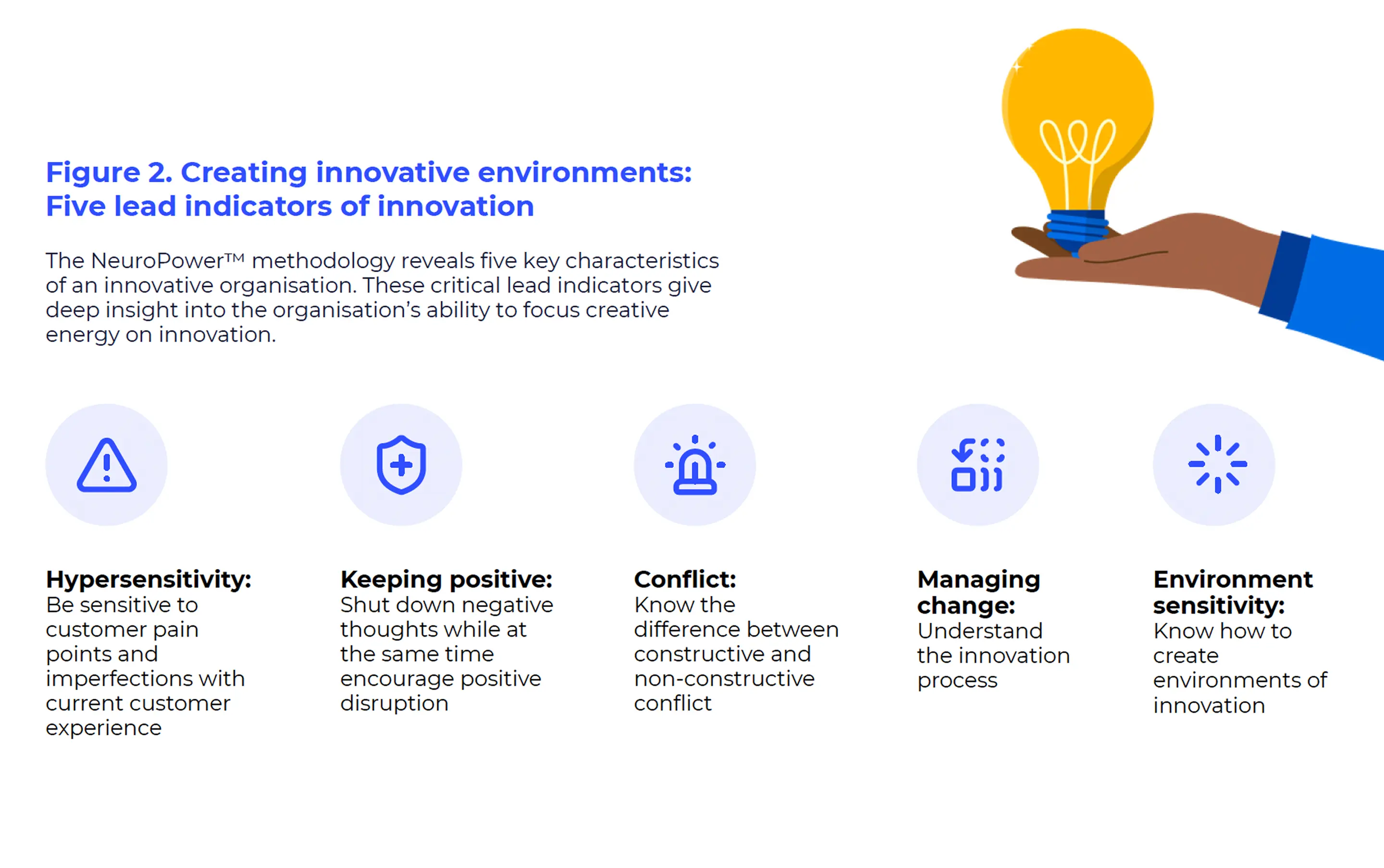
4. Understand the innovation process
There is one big difference between good and great teams. Good teams tend to argue from their perspective and try to thrash out who is right and who is wrong, whereas great teams know how to sequence perspectives so they build on each other toward a better solution.
In good teams, validating one’s own perspective becomes more important than discovering the best solution. Even when people don’t enter the conversation with a particular point of view, they quickly take a position in order to have something to defend.
People in this situation act a bit like a boxer who is trapped in a corner and trying to fight their way out. The goal is to win the fight, not co-create and innovate. In this situation, those that argue for the status quo tend to win the day, and people with innovative ideas learn very quickly that new ideas are not welcome and can in fact be career-limiting.
Great teams know how to sequence perspectives so they build on each other. New ideas are seen as opportunities to advance the group, rather than threats to individual standing within the company.
Steve Jobs was never afraid of new ideas that challenged the status quo. He is famously quoted as saying “We have always been shameless about stealing great ideas”. For Jobs it didn’t matter where the new ideas came from, as long as they were coming from somewhere. In his teams he created a process for sifting, considering, and building on new ideas.
Often great products were the combination of hundreds of great ideas coming together. Whether the new idea was eventually turned into reality or not wasn’t the point. Creating an environment where people could (and were expected to) offer and build on new ideas was seen as crucial to innovation. Evidence of this philosophy can be found in the thousands of patents that have been registered by Apple.
5. Know how to create environments of innovation
The role of the true innovative leader is not about knowing everything or coming up with the right answer (hero) rather it is about knowing how to create an environment that can foster innovation and true creative collaboration.
The process for leading people and creating an environment of innovation in the world of business is complex. This is particularly salient when things are not going so well and stress levels are increased. In this situation there are six things a leader needs to address in order to lead effectively and drive innovation and performance:
Create a safe and secure environment for new ideas to be tabled and captured;
Empower people to express themselves by turning emotions into words;
Motivate and embed the value of creative thinking by identifying, delivering and celebrating quick wins;
Show the value of new ideas to individuals through active feedback loops and making sure ideas are heard;
Make sure the processing of information flows quickly throughout the organisation; and
Create a broad shared vision for the future that entire organisation can aspire to.
When this is done well, innovation is a natural emergent quality.
Conclusion
Innovation comes in many shapes and sizes, including the way a product is developed and interacts with the customer through to the innovative business model. Companies like Apple not only win for their innovative products, but they really win for their innovative business models which move pieces of software or hardware to loved channels and modes of operating.
The five things that define innovative leadership, and the process of creating innovative work environments are what we are going to be covering in the workshop. But in the meantime we will close in the words of Steve Jobs, “The ones who are crazy enough to think they can change the world, are the ones who do”.
“Empowering employees to think, act and create in an innovative, unconventional manner requires more than a mandate. It demands a protected dynamic that permeates a corporate infrastructure, strategy and conduct, which recognises and respects innovation as the means to a much better end... Tolerance, respect and support for innovation are how Jobs toppled IBM and Microsoft as computer forces back then. He made innovation priority one at every level, compared to what it is at most companies: an afterthought, or an adjunct of research and development, heavily shaped by budgetary considerations.” – Diane Mermigas, Business Insider, Australia, Oct 2011